
Best Concealed Carry Options Without a Belt (2026 Guide)
Carrying a firearm without a belt is one of the most common challenges people run into with concealed carry.
Gym shorts, joggers, athletic wear, and even certain casual outfits don’t support traditional holsters—forcing people to either change how they dress or look for alternative solutions.
The good news is, there are options.
The better question is:
Which ones actually work consistently?
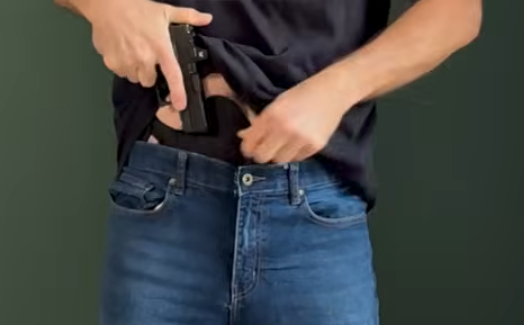
The Video Below Is A Real Life Example Of A Great Option
The Real Challenge of No-Belt Carry
Most holsters are designed around one assumption:
? You’re wearing a belt.
Without that structure, you lose:
- Support
- Stability
- Consistent positioning
So any no-belt solution has to replace those functions in some way.
How to Evaluate No-Belt Carry Options
Before choosing a setup, it helps to evaluate it using a consistent framework:
- Safety
- Accessibility
- Stability
- Concealment
- Comfort
If a system doesn’t perform well across these areas, it may work occasionally—but not reliably for everyday carry.
Common No-Belt Carry Options
1. Belly Band Holsters
Belly bands are one of the most widely used no-belt options.
Pros:
- Works with gym shorts and athletic wear
- Flexible positioning
- Easy to use
Cons:
- Limited trigger protection in many designs
- Can shift during movement
- Heat and bulk over time
- Slower or less consistent access
? Learn more: Are Belly Band Holsters Safe?
2. Clip-On Holsters (No Belt)
Some holsters are designed to clip directly onto the waistband without a belt.
Pros:
- Simple setup
- Familiar holster feel
Cons:
- Limited support without belt tension
- Can tip or shift
- Less stable with lighter clothing
3. Pocket Carry
Pocket carry is another option for smaller firearms.
Pros:
- No waistband support needed
- Easy concealment in some clothing
Cons:
- Limited firearm size
- Slower access
- Requires dedicated pocket use
4. Adaptive Carry Systems (Modern Approach)
Newer systems are designed specifically to solve the no-belt problem without relying entirely on compression or clips.
These systems focus on:
- Structural support
- Consistent positioning
- Reduced bulk
Instead of adapting a belt-based holster, they’re built from the ground up for versatility.
What Actually Works in Real Life
The biggest difference between these options shows up in consistency.
A system might work:
- Standing still
- For short periods
- In specific clothing
But everyday carry means:
- Movement
- Sitting
- Adjusting throughout the day
- Different outfits
That’s where weaker systems start to fall apart.
A More Consistent Approach
If you’re carrying without a belt regularly, the goal should be:
? A system that works across multiple clothing types without sacrificing safety or access
That means:
- Reliable trigger protection
- Stable positioning
- Predictable draw
- Manageable comfort
Modern adaptive systems are designed with those priorities in mind.
? Explore one example here: Adaptive Carry Solution ACS Holster
See It Tested Across Real Outfits
If you want to see how a no-belt system performs in gym shorts, tucked shirts, and even a full suit:
? Concealed Carry By Clothing - Gym Shorts to a Full Suit Test
Final Thoughts
Carrying without a belt doesn’t have to mean compromising your setup.
There are multiple ways to make it work—but not all of them perform equally when you look at safety, stability, and consistency over time.
The best solution is one that adapts to your clothing without forcing you to adapt your lifestyle around your gear.